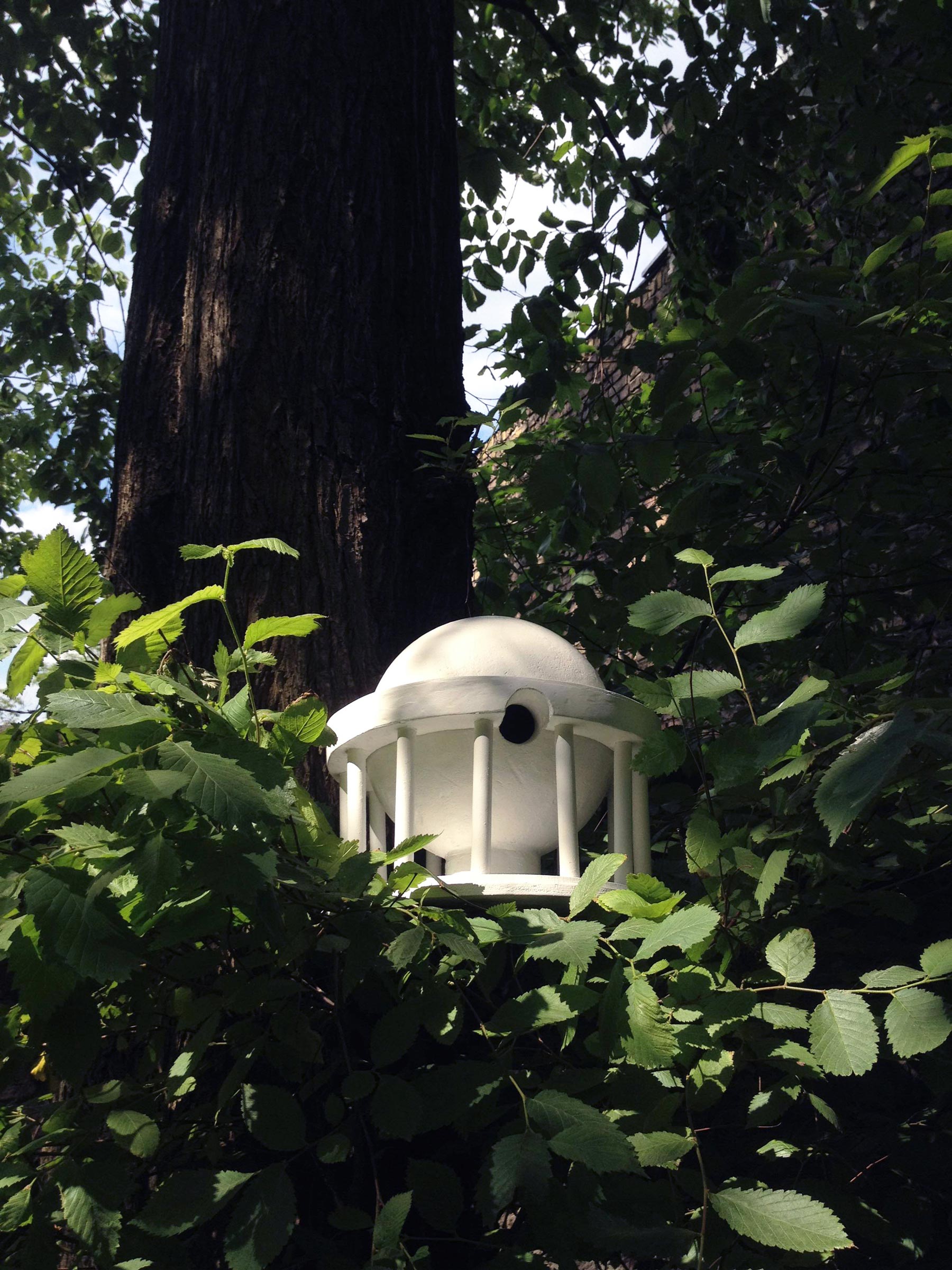
Álvaro Urbano, Utopias are for Birds (Antoine-Laurent-Thomas Vaudoyer, Maison d’un Cosmopolite, 1782),2016, Wood, paint, nest, 32 x 32 x 32 cm.
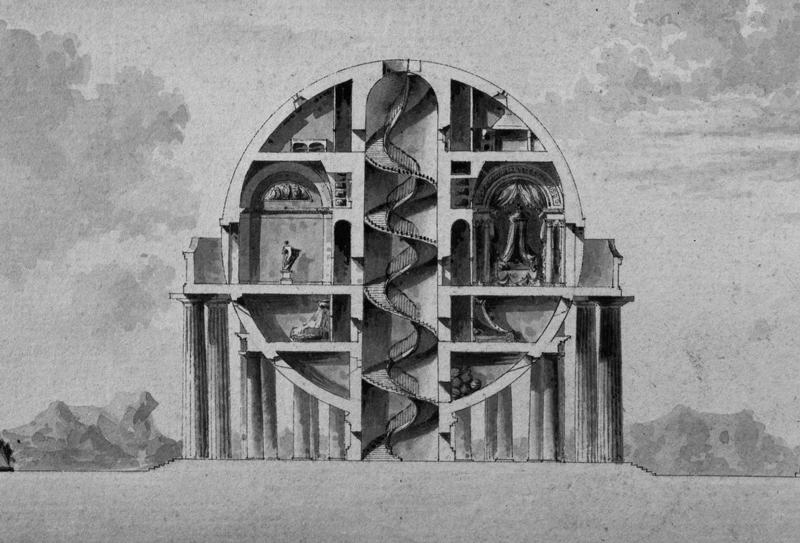
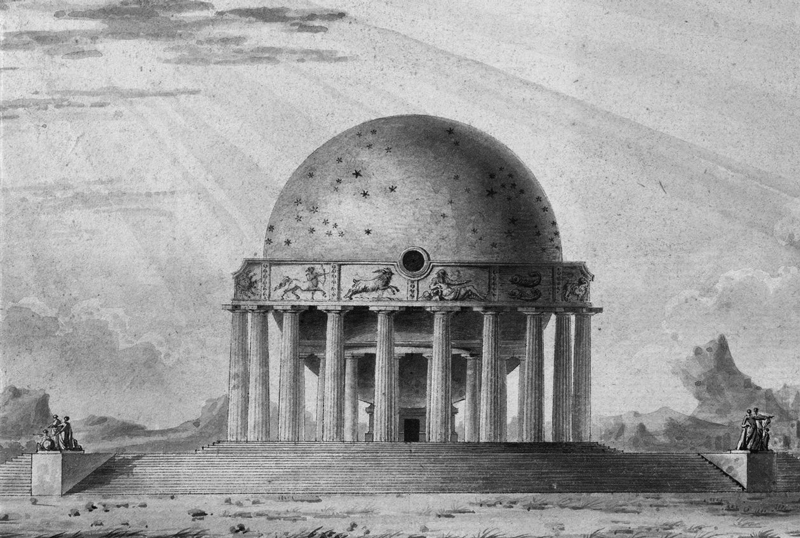
Antoine-Laurent-Thomas Vaudoyer, Maison d’un Cosmopolite, Watercolor on paper, 1783.
In the series Utopias are for Birds, Álvaro Urbano transforms historically “impossible” architectural designs into functional birdhouses. The project is rooted in the artist’s research into utopian blueprints and sketches that were once deemed economically or structurally unfeasible for human construction. By repurposing these failed or unbuilt human projects as avian nests, Urbano provides a physical reality for architectural ideas that previously existed only on paper.
A central point of reference for this series is Antoine-Laurent-Thomas Vaudoyer’s Maison d’un Cosmopolite, which informs the artist’s exploration of radical architecture alongside other seminal works. The project includes meticulous reproductions of sketches by Claude-Nicolas Ledoux—specifically his Maison des Directeur de la Loue and House of a Woodsman—as well as designs by Yona Friedman, John Hejduk, and the firm SuperStudio. These structures bridge the gap between human imagination and the natural world, drawing a lineage from classical concepts like Plato’s Ideal City and Thomas More’s Utopia to the practical needs of wildlife.
Designed for outdoor environments, these sculpture-nests are intended to be hung high in trees to provide actual shelter for birds. In this context, the birds become the inhabitants and “performers” within the pieces, embodying the idyllic metaphor of freedom of movement. The project is further expanded through diorama collages and installations that layer architectural cutouts with bird illustrations, creating a fictional space where these utopian structures finally find their purpose and their inhabitants.